Coming to Know (Annie) Oaklynn
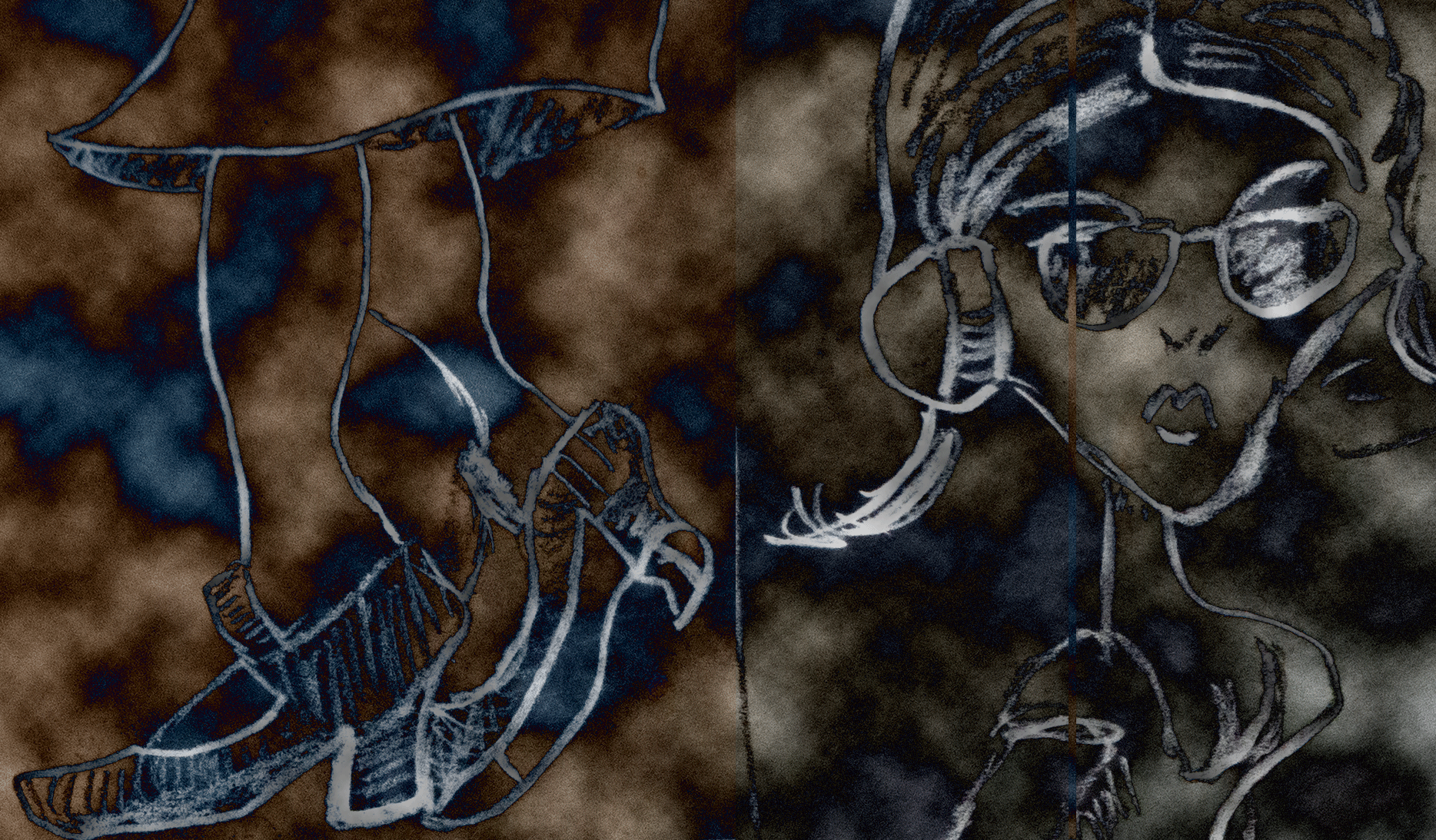
They have a girl. Her name is Oaklynn. Calling her Annie. They. The two. The two unknowings knowing Annie whose name is Oaklynn. No Annie being part of her name. Not just girl but girlfriend. They both have a girlfriend named Oaklynn who they call Annie. But only one Oaklynn (Annie). Two girlfriends, but really just the one girl. They have grown used to having and having had but not “halving” Annie (Oaklynn). Unknown but very knowing. Knowing the fine long spine with trembling fingers. Knowing the jutting-out tailbone. Knowing the squeeze of soft-plump roundables. Knowing the, “Yes please, Annie, yes, simply must, must have, please pleeeeeeeeeeeeeeze.” They are two “I”s that each possess a knowing of Annie/Oaklynn, yet are unknowing of a collective they.
When the unknowing becomes known, the two “I”s become “he”s: Who is he? What does he have that I don’t have? They both make these types of comments after coming to know the other he is knowing Annie (Oaklynn) roundables—both round-front and round-back knowings. They know this now. He and he. The two “I”s who know. The theys who have reverted to calling Annie “Oaklynn” out of fear or spite. He fears, he spites, he spites, he fears. They both fear and spite collectively, although unknowingly fearing and spiting the same. They don’t realize that they, in all actuality, have Annie, so to speak, when these comments are made (not Annie, but Oaklynn—they, both and each, he[I] and he[I], have refused to call little Oaklynn “Annie” ever since plural knowing).
They now know the collective, joint and severally. “Joint and severally” is a bureaucratic term that neither of the two “I”s in question know. Oaklynn knows—she works in accounting. Annie knows too, but that is perhaps redundant. Redundant. They, however, now know about the two “I”s that are also the two “he”s that together make the one “they.” They still refuse to call her Annie, not knowing the other refuses to call her Annie too. Each saying, “I can no longer call you Annie, Oaklynn.” Both asking, “Does he also call you Annie, Oaklynn?” Neither knowing that what is being said is the same as what has been said and/or will be said just before or after or while knowing (Annie) Oaklynn. Knowing the ankle-knocking lock, the signature (Annie) Oaklynn grasp, pull, tug, yes, oh yes. Oh.
Oh, they know that they both share Annie and Oaklynn, but it is not a simultaneous sharing of Annie-Oaklynn space. They don’t know that Oaklynn, or perhaps Annie (actually they are the same, but calling her Oaklynn), is willing to share, in real time, a collective sharing. If they did, one would call her Oaklynn, the other—this is where they differ—would call her Annie. But Oaklynn, aka Annie, will not tell them this because they’d simply know too much and much jealousy would surface for the two I[he]s in question: one I’s jealousy of his technique, size, amount of attention received from Oaklynn, or Annie, or worse, both Oaklynn and Annie, the one girl they know and have known but will soon come to unknow; soon to be severed jointly, yet not simultaneously, from Annie (Oaklynn) by Oaklynn’s (Annie’s) kind words and tactful use of breakup clichés. They will both take the knowing that there will be no more knowing Annie, or Oaklynn for that matter, very hard, becoming two unknowings with no one to know.
(first appeared in Monkey Puzzle / copyright 2026 Merrill Shane Jones)